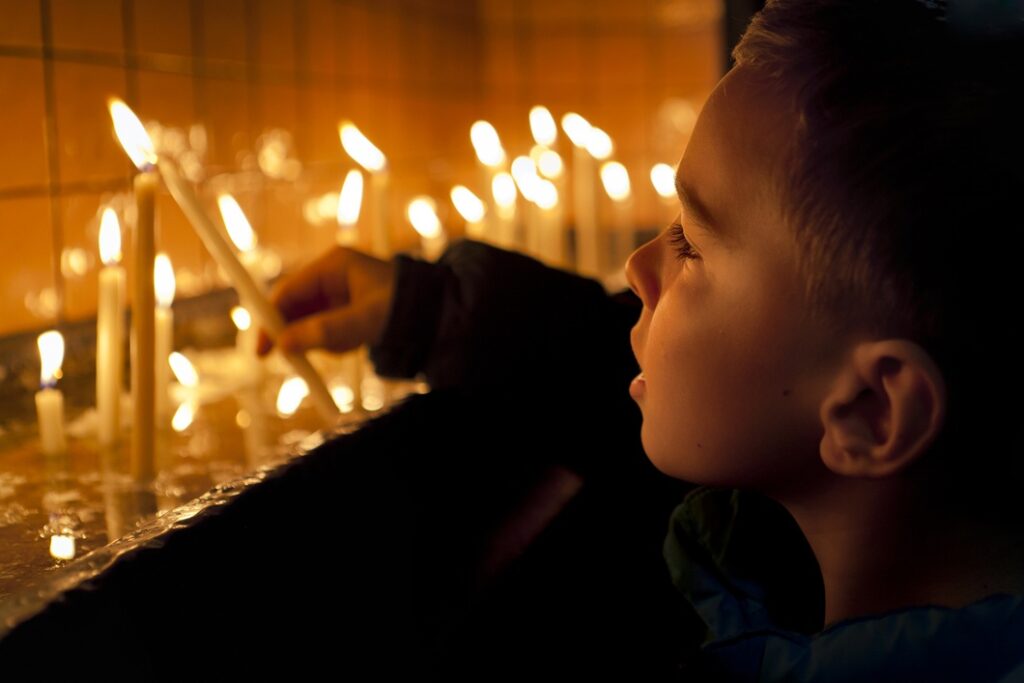
Recognize the children pictured? You may if you live in Ludlow, Massachusetts. They are found at FESTA, the town festival around Labor Day, a cultural event with Portuguese food, loud music, local organizations, children’s carnivals, law enforcement, and dignitaries—great things. But there is no carnival for these children, their throats parched and bleeding from ropes, which they hide from parents. The apparition knows all about it, and so does the local Catholic church hosting the festival celebrating the apparition speaking to three young children in Fátima, Portugal in 1917. Tens of thousands attend, but few ask the unsaid: what did the apparition tell the children?
A Catholic press article [1] on FESTA summarizes two-fold: “The Blessed Mother told the children to pray the rosary daily for peace and to offer up their suffering for the conversion of souls.” That is precise but requires unpacking.
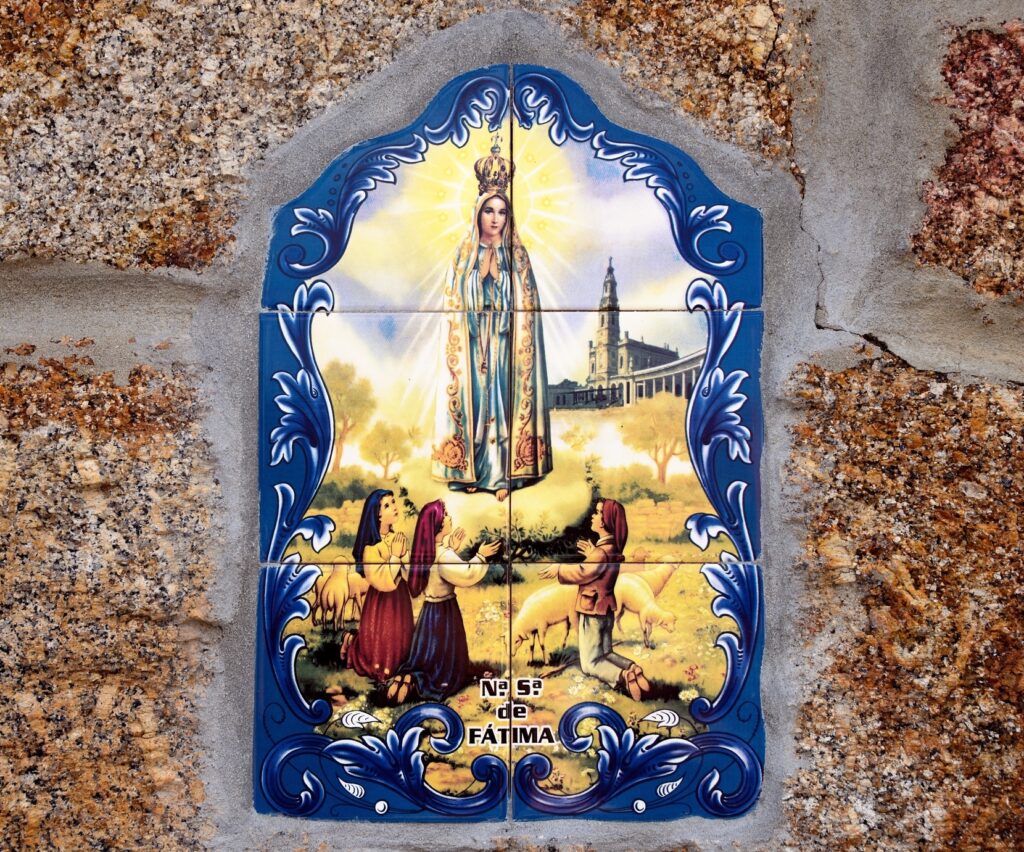
Fatimá painted in ceramic mosaics within a stone wall. (source: ID 31755295 Rogerio Bernardo | Dreamstime.com)
A more comprehensive account by Father John de Marchi, found on EWTN [2] and reviewed by the sole surviving child, elaborates on the suffering:
Once, returning from the Cova da Iria, they passed a pond belonging to a family named Carreira It was a dirty pool of water where some women washed their clothes and others brought their animals to drink. Jacinta was weak from ordeal: her throat and her tips were parched.
“My head aches so, Lucia; I’m terribly thirsty, I think I’ll take some of this.”
“Not from here, Jacinta, please. My mother forbids it, anyhow. She says it might make me ill. We can go and get good drinking water.”
“I don’t want to drink good water.” The little girl was determined. “If I must drink something I will take this water and offer it to our Lady.”
The refusal of fresh fruit, with its nourishment and thirst-killing juices, was another means of self-denial. Lucia tells of Jacinta accepting grapes and figs from her mother, concealing, rather than consuming them, then giving them to children they met along the road. And finally, there was the penitential cord that each child wore.
This practice began when Lucia found a length of abandoned rope. Experimenting with it, as a child will, and wrapping it around one arm, she noted the pain its tension brought. She thought about this for a little while, then spoke to the others.
“This is something we could use as a sacrifice,” she said.
“We can knot cords like this and wear them around our waists.”
It may not seem to many a happy thought, but it is a documented record of Fatima that a tightened cord around each of their waists was a daily chastisement. Even at night they did not spare themselves until our Lady, during the September apparition, told them they must not wear the cords to bed.
— The True Story of FATIMA
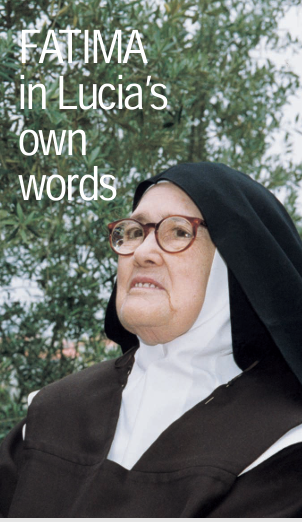
You may sense the author’s discomfort or apology, in this self-described “story-book” account charmingly written with children as an audience, who like their parents might not find this a happy thought. But maybe you can appreciate the mercy of the apparition in instructing the ropes use only during the day, but wouldn’t continual wearing be an even happier thought in this view? The account Fatima in Lucia’s own Words [3] by the sole surviving child (the older cousin and in many leads leader of the two younger children) is more explicit: “This cord had three knots, and was somewhat stained with blood. I kept it hidden until I finally left my mother’s home. Then, not knowing what to do with it, I burned it, and Francisco’s as well,” and “As a matter of fact, this water was filthy. People washed their clothes in it, and the animals came there to drink and waded right into it. That was why my mother warned her children not to drink this water.” The full quotes:
Some days later, as we were walking along the road with our sheep, I found a piece of rope that had fallen off a cart. I picked it up and, just for fun, I tied it round my arm. Before long, I noticed that the rope was hurting me. “Look, this hurts!” I said to my cousins. “We could tie it round our waists and offer this sacrifice to God.” The poor children promptly fell in with my suggestion. We then set about dividing it between the three of us, by placing it across a stone and striking it with the sharp edge of another one that served as a knife. Either because of the thickness or roughness of the rope, or because we sometimes tied it too tightly, this instrument of penance often caused us terrible suffering. Now and then, Jacinta could not keep back her tears, so great was the discomfort this caused her. Whenever I urged her to remove it, she replied: “No! I want to offer this sacrifice to Our Lord in reparation, and for the conversion of sinners.” Another day we were playing, picking little plants off the walls and pressing them in our hands to hear them crack. While Jacinta was plucking these plants, she happened to catch hold of some nettles and stung herself. She no sooner felt the pain than she squeezed them more tightly in her hands, and said to us: “Look! Look! Here is something else with which we can mortify ourselves!” From that time on, we used to hit our legs occasionally with nettles, so as to offer to God yet another sacrifice. If I am not mistaken, it was also during this month that we acquired the habit of giving our lunch to our little poor children, as I have already described to Your Excellency in the account about Jacinta.
— FATIMA in Lucia’s own Words[3]
“God is pleased with your sacrifices, but He does not want you to sleep with the rope on; only wear it during the day.”
— FATIMA in Lucia’s own Words[3], Apparition on September 13th, in her second-to-last appearance.
One day, he [Francisco] gave me the rope that I have already spoken about, saying: “Take it away before my mother sees it. I don’t feel able to wear it any more around my waist.” He took everything his mother offered him, and she could never discover which things he disliked. He went on like this until the day came for him to go to heaven. The day before his death, he said to Jacinta and myself: “I am going to heaven, but when I’m there, I will pray a great deal to Our Lord and Our Lady, asking them to bring you there, too, very soon.” … A few days after falling ill, she [Jacinta] gave me the rope she had been wearing, and said: “Keep it for me; I’m afraid my mother may see it. If I get better, I want it back again!” This cord had three knots, and was somewhat stained with blood. I kept it hidden until I finally left my mother’s home. Then, not knowing what to do with it, I burned it, and Francisco’s as well.
— FATIMA in Lucia’s own Words[3], when the two younger children were dying of illness
Occasionally also, we were in the habit of offering to God the sacrifice of spending nine days or a month without taking a drink. Once, we made this sacrifice even in the month of August, when the heat was suffocating. As we were returning, one day, from the Cova da Iria where we had been praying our Rosary, we came to a pond beside the road, and Jacinta said to me: “Oh I’m so thirsty, and my head aches so! I’m going to drink a little drop of this water.” “Not that water,” I answered. “My mother doesn’t want us to drink it, because it’s not good for us. We’ll go and ask Maria dos Anjos for some.” (She was a neighbour of ours, who had recently married and was living near there in a small house). “No! I don’t want good water. I’d rather drink this, because instead of offering Our Lord our thirst, I could offer Him the sacrifice of drinking this dirty water.” As a matter of fact, this water was filthy. People washed their clothes in it, and the animals came there to drink and waded right into it. That was why my mother warned her children not to drink this water. At other times, Jacinta would say: “Our Lord must be pleased with our sacrifices, because I am so thirsty, so thirsty! Yet I do not want to take a drink. I want to suffer for love of Him.”
— FATIMA in Lucia’s own Words[3], when the two younger children were dying of illness
The two books distributed at the fair each year at the religious booth are written by the same Father de Marchi, one in English and one in Portuguese, and contain the same account (a small children’s book may be next to it). It’s not clear to me how many of the thousands of people attracted to the nearby music stage or even those staffing the booth have read the books at all. Here is a section of Era uma Senhora mais Brilhante que o Sol (p. 166), within the chapter, “Rezai… E fazei sacrifícios pelos pecardores” (which when translated are the words above in the Catholic Press article):
A sede, um dos tormentos mais difíceis de suportar no estio e na nudez da serra, era uma das suas mortificações dilectas. Chegavam a passar nove dias sem beber e até um mês, o mês de Agosto!
Voltavam certa ocasião da Cova da Iria, onde tinham ido rezar o terço e, ao passar pela lagoa da Carreira, lagoa sujíssima onde se lavava roupa e os animais entravam para beber, a Jacinta diz para a Lúcia:
– Olha! Tenho tanta sede e dói-me tanto a cabeça!… Vou beber uma pouquinha desta água.
– Desta não — lhe responde a prima. — Minha mãe não quer que bebamos daqui, porque faz mal; vamos pedir uma pouquita à tia Maria dos Anjos.
– Não — interrompe a criancinha — dessa água tão boa não quero; bebia desta, porque, em vez de oferecer a Nosso Senhor a sede oferecia-Lhe o sacrifício de beber desta água suja.
…
Andando certo dia a pastorear o gado, encontram um certo bocado de corda. A Lúcia, brincando, ata-a ao braço e não tarda a notar que a corda a magoa.
– Olhem, isto faz doer; podíamos atá-la à cinta e oferecer a Deus este sacrifício.
A aspereza e grossura da corda tornavam o suplício, na verdade, horroroso. A Jacinta, mais tenrinha, devia sofrer, por vezes, atrozmente. As lágrimas soltavam-se-lhe com a força da dor, mas, quando a Lúcia a aconselhava a que tirasse a corda respondia:
– Não! Quero oferecer este sacrifício a Nossa Senhora, em reparação e pela conversão dos pecadores.
Nem mesmo à noite, ao deitar, tiravam aquele cilício; foi preciso que a própria Mãe do Céu, na Aparição de Setembro, lhes viesse dizer que não consentia que tivessem a corda durante a noite.
Here is a section of the English, FATIMA from the Beginning:
Thirst is one of the worst torments during the burning summer of the serra. It was one of their favorite mortifications. They passed nine days, and on one occasion a month without drinking, and this in the month of August!
One day, returning from the Cova de Iria where they had been to say the Rosary, they passed the Carreira pond, a dirty pool of water where the women wash clothes and the animals are brought to drink. Jacinta said to Lucia:
“My head aches so, and I’m so thirsty; I think I’ll drink a little of this water.”
“No, Jacinta, not from there. My mother doesn’t want us to drink that water because it’s dirty and might make us ill. Let’s go and get some from Aunt Maria.”
“No, I don’t want to drink that good water. I’d like to drink this so that instead of offering Our Lady thirst I can offer this dirty water.”
…
One day Lucia found a piece of cord on the serra. Playing with it she knotted it round her arm and did not fail to note that it hurt.
“Here’s something that we can use for sacrifice,” she told the others. “We an knot it and put it round our waists and offer the pain.”
Even at night they did not take off those pieces of knotted cord. Our Lady, in the September Apparitions, had to tell them not to wear the cord at night.”
The versions are not word-for-word: e.g. “did not fail to note that it hurt” does not carry the same weight or força as “As lágrimas [tears] soltavam-se-lhe com a força da dor,” and “instead of offering Our Lady thirst I can offer this dirty water” is in the other offered to “Nosso Senhor.”
Why
Lucia says this was in one sense for the apparition’s consolation:
Look, look, here’s something we can make sacrifices with! Whatever it might cost them, the children never lost an opportunity consoling the heart of the Mother of God.
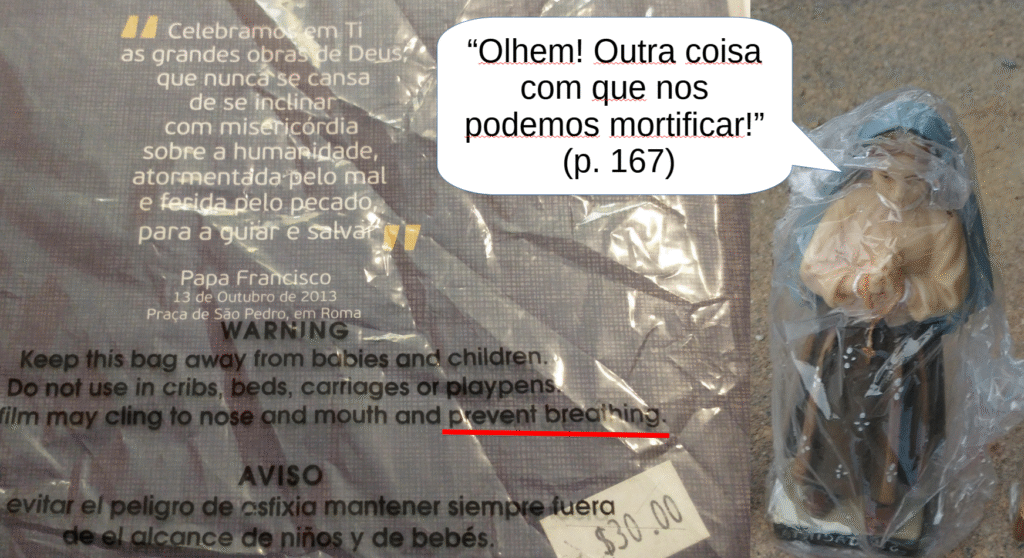
– Olhem! Olhem! Outra coisa com que nos podemos mortificar! Por muito grandes que fossem os sacrifícios nunca os videntes se lhes furtavam, nunca deixavam passar ocasião que se lhes oferecesse de consolar o Coração Imaculado de Maria Santíssima, ofendido por tantos pecados.
Quote from book illustrated with its plastic cover, typical of the mindset of seeking everyday objects warned against.
They tied the affliction on themselves or self-harm with saving others from Hell and consoling the apparition’s heart, a hole not clearly ever filled. They applied their full childhood creativity toward such ends, as said prior in this chapter, “They wanted to convert many, if not all sinners, and labored to invent new ways by which this might be accomplished by means of every conceivable suffering.”
These things were hidden from parents, said out of fear but presented here as humility, according Lúcia, the sole person to report even the children’s self-inflictions in part:
If Sister Lucia has not in part lifted the veil we should never have known what to heroic lengths these children went. “Why did you not speak of Out Lady’s desire for sacrifice for the conversion of sinners?” Lucia was to be asked later. “Because we were afraid they would ask us what sacrifices we did.” Humility’s own reply. Lucia’s manuscripts relate but few of these sacrifices and they nearly all refer to Jacinta…
— Fr. de Marchi, FATIMA from the Beginning [11]
Se a Irmã Lúcia de Jesus não tivesse levantado um poucochinho o véu, nós não teríamos nem por sombras adivinhado que dose de heroísmo se albergava em crianças de tão tenra idade. – Porque nunca falaram da recomendação de Virgem de oferecer sacrifícios pela conversão dos pecadores? – perguntar-se-á mais tarde à Irmã Maria das Dores. – É porque não queríamos que perguntassem que sacrifícios fazíamos. É a resposta da humildade. São poucos os actos de mortificação que a Lúcia relata no seu manuscrito e quase todos se referem à Jacinta…
— Fr. de Marchi, Era uma Senhora mais Brilhante que o Sol [12]
According to Lúcia, again the only one telling this, these were Jacinta’s thoughts of this:
Jacinta and Francisco had a better time of it, and mainly because of the vigilance, honour and kindness of Ti Marto, who would allow no one to threaten, or raise a hand to his children. Behind the secure protection of her father’s love, however, Jacinta longed for the dubious delight of being pummelled black and blue.
“I wish my parents were like yours,” she told Lucia.
“Then I could get beaten, too, and I would have another sacrifice to offer our Lord.” [2]
Dubious is a fitting word. The account here also says the father of the younger children allowed none to raise a hand on his children, but how did the children bleed? Note also that Lúcia’s father is presented a drunk and she suggests her cousin wanted to be “beaten too.” Some who suffer through domestic abuse have difficulty relating to the concept of a God as a good Father in Heaven, having never known a good father on Earth. Jesus had this mindset toward those that brought him suffering: “if it is possible, let this cup pass from Me” or “forgive them” (Mathew 26:39, Luke 23:34).
Mixed into the story are tidbits more palatable, but even here giving for the simple benefit of the receiver and joy of the giver becomes more complicated:
One day they were playing by the well when Olimpia brought some grapes to refresh them. As soon as her mother’s back was turned Jacinta resolved not to eat them and to offer the sacrifice for sinners, and seeing some poor children in the road she ran and gave them the grapes.
Lots to unpack, but this article began by quoting the True Story, whose next sentence reads:
What a contrast between these emulators of the saints and the youth of to-day which only seeks comfort, pleasure and amusement! [2]
And with the FESTA amusement rides, is there contrast between this priest and priests today? We will explore this later.
Is Beauty the Test of Goodness?
Here the children processed their situation this way, repeated uncritically by these adults: “it couldn’t couldn’t be the devil! People say that the devil is ugly and lives under the earth in hell, but that Lady was so beautiful, Lucia, and didn’t we see her go up into heaven?” [2] Is beauty the test of goodness? Era uma senhora mais brillhante que o sol.
Dorothy: Oh, but I’ve already told you, I’m not a witch at all! Witches are old and ugly. [Munchkins giggle] What was that? Glinda: The Munchkins. They’re laughing because I am a witch. I’m Glinda, the Witch of the North. Dorothy: You are?! Oh, I beg your pardon! But I’ve never heard of a beautiful witch before. Glinda: Only bad witches are ugly. — The Wizard of Oz
Even Lúcia had been tormented by dreams of the “devil laughing at having deceived me” [3] — i.e. whether Mary and the apparition are separate — and the Catholic church describes Fátima in strong but not strongest terms (“worthy of belief”) while less confident on other apparitions like in Yugoslavia (a whole other discussion). These discerning spiritual teachers would surely discuss the Fall (fruit pleasing to the eye, Gen 3:6), angels of light (2 Cor 11:14), signs and wonders (Mark 13:22), and the appearance of Christ (Isa 53:2) and wolves (Mat 7:15)?
Can we recognize good food? A Fátima cookbook, which I recommend purchasing, on page 4, recommends using the freshest ingredients and cleaning away any dirt and insects. That’s a bold statement because, as elaborated later in the story, the apparition “does have a way of scoffing at the hygienic fears of the meticulous,” approving rather that “They dug up the earth near the tree and rubbed the sick with it. Some people ate it and were better afterwards.” [2] Father Ferreira’s position was “It is already a miracle that such dirty, impure water has not once done any harm to those who drink it” toward Dr. Alves who pushed for and obtained improvements to the water “full of dirt and microbes” [2] but was more derided than thanked.
Hail Mary! (and not us)
The children’s interaction is conveyed as follows to the common press:
“God sent his Blessed Mother to these three poor shepherd children with a message for the world – a message of mercy, love, salvation and peace… a more unified, loving humanity,” — priest conveying to a Springfield newspaper, Aug 29, 2024.[5]
Dozens of Ludlow businesses sponsor, numerous bands play, even a community organization dealing with youth mental health cheered it, the ambassador of Portugal attended [7], and local police rightly rightly have a large presence at the large fair, attached to the apparition. Some may call that a system.
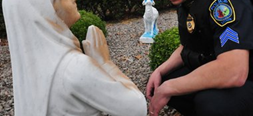
The grandmother of the sergeant “bought the statues in 1953 as an offering for her husband who was suffering from cancer.” source: https://www.masslive.com/news/2011/04/ludlow_police_to_forward_findi.html
A system with cracks.
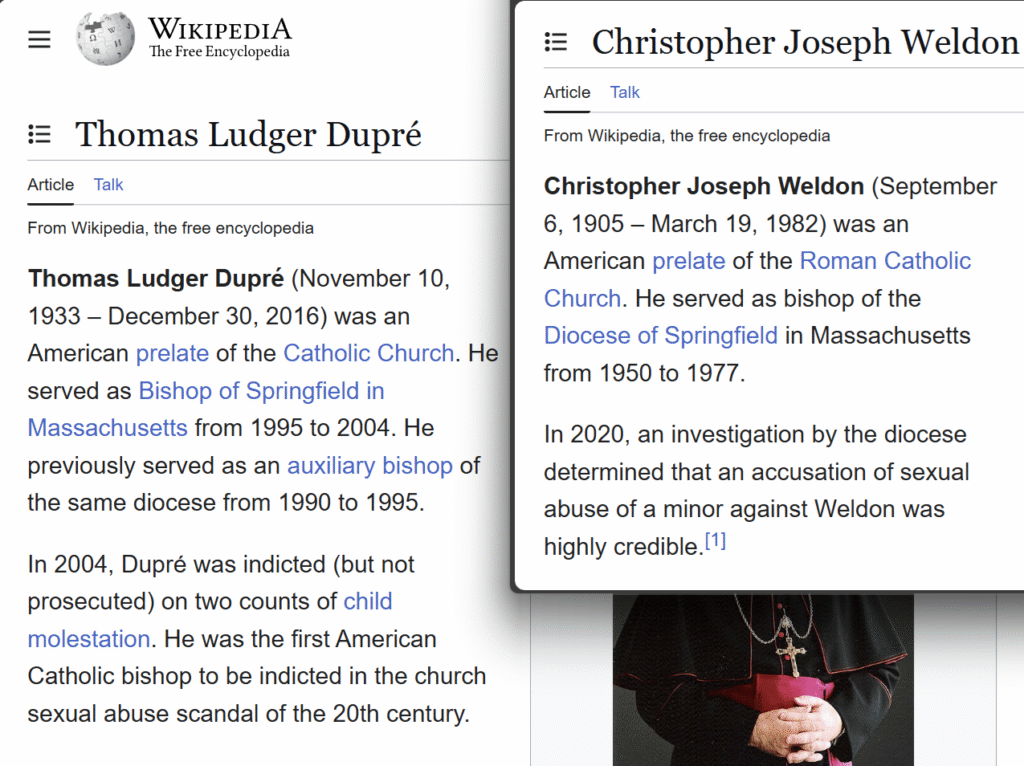
How does the Springfield, MA diocese view children hiding things from parents? Discerning apparitions aside, they have had difficulty discerning good and bad clergy towards children [4], even twice the bishop at the top, and even the head of Camp Fatima in NH (~1971-1990) repeatedly.
source: Ilustração Portuguesa no. 610, 29 October 1917. https://commons.wikimedia.org/wiki/File:ChildrensofFatima.jpg
These were real kids, not just a “story.”
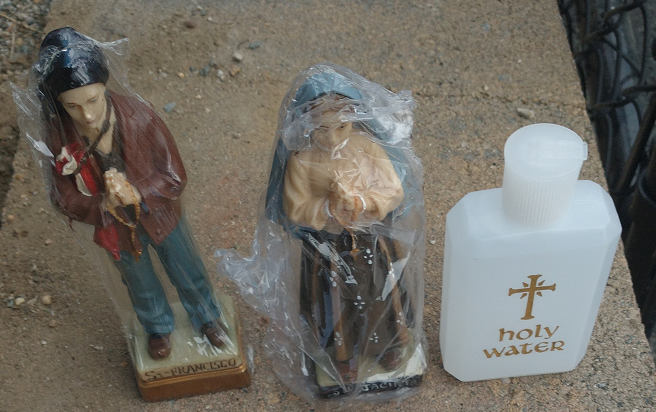
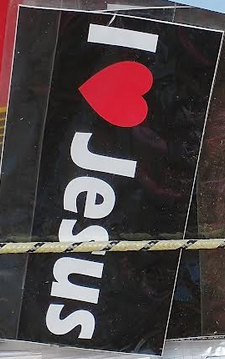
This author’s interest stemmed from attending the festival in 2022 and reading the account. Also notable was a vendor there selling flags and I love Jesus signs (pictured below) next to signs of a particular politician, do you really want to know, surely you all saw it, peeing on another and conveying that sexual organs are weapons, as children, priests, and surely thousands of people walked by, not far from the big apparition statue. Finding this peculiar for a church festival on various levels, and did I mention police sometimes are called against children toward the statue, think about that, I picked up the two signs and asked why people do this on each other if they love Jesus. Not able to buy a sign, I bought child statues and holy water to build a holy shrine, a testimony, that children should drink clean water. The children had been wrapped in plastic as protection from the rain that day, evidence we know what God knows.
One of the signs at the FESTA booth.
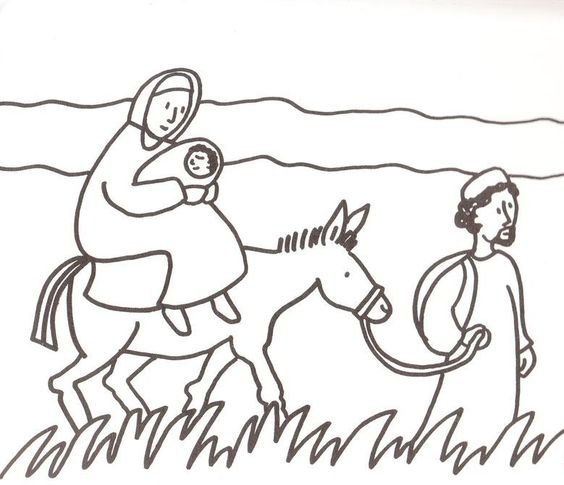
Now, Mary, the mother of Jesus of the Bible, who this is claimed to be, protected her child and fled to Egypt (Matthew 2:13-15) – hail Mary! I could imagine Joseph here figuratively carrying a Portuguese flag, as he too protected his family and people, in his vision and dreams.
Flight to Egypt (source: clipart-library.com/clipart/1768570.htm)
For all you men, what type of man will you be?
Palavras Finais
The apparition also made certain demands on the Church concerning her heart and promises toward personal salvation and world peace:
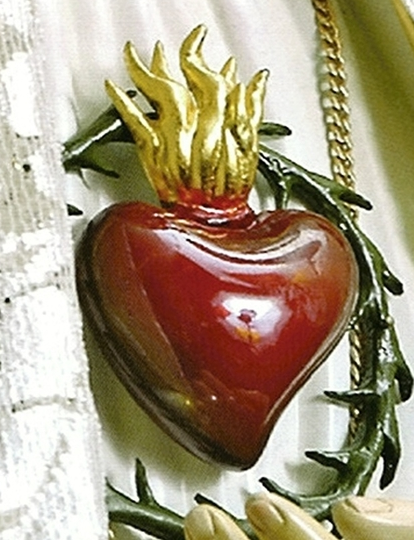
“My daughter, look at my Heart encircled with the thorns with which ungrateful men pierce it at every moment by their blasphemies and ingratitude. Do you at least try to console me and announce in my name that I promise to assist at the hour of death with the graces necessary for salvation all those who, on the first Saturday of five consecutive months, go to Confession and receive Holy Communion, recite the Rosary and keep me company for 15 minutes while meditating on the mysteries of the Rosary with the intention of making reparation to me.” — Conveyed by Lucia, December 10, 1925 [10]
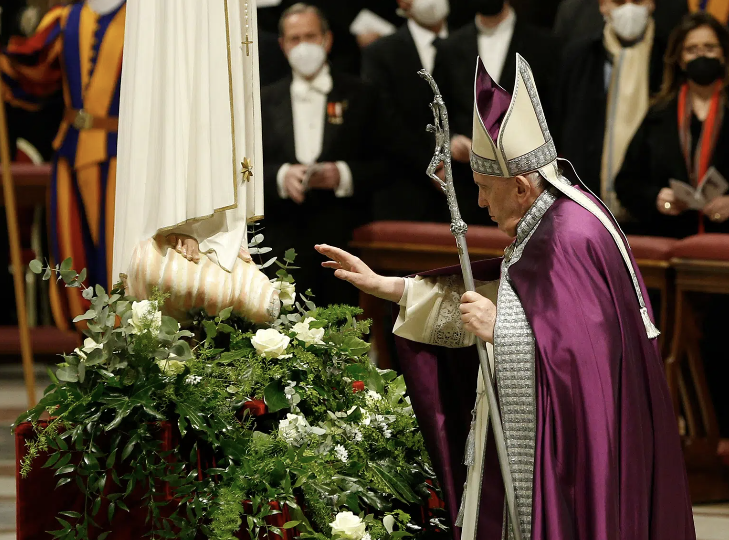
There are other dimensions to this: There’s an article on its interaction with the political history of Portugal [6] (the ambassador of Portugal attending [7]), the “consecration of Russia” relation to world peace, the “bullet” John Paul II mentioned at the FESTA worship service, and the “third secret.” We can dwell much in those intrigues, but it’s not the most important thing.
It has entered the Church. And your community. And your family. We don’t talk about it. This blog opens discussion. And the discussion will be had with dignity because that is what we are all fighting for.
In a sea of doubt and unanswerable questions, I find it helpful to identify the knowns: What do you know, can stand firmly on? Is it the motherly instinct concerning children? What the Catholic church does not doubt, nor other churches for that matter, is that God came down to Earth, was executed on a cross at the hands of mankind, so foundational that Paul said, “but we preach Christ crucified,” but defeated that death for his children in his resurrection. It is the grace of God toward you. It is the character of the Christian life. It conveys the sense of a prisoner on his side pardoned, rope burned and thirst quenched with living water.
A Samaritan woman came to draw water, and Jesus said to her, “Give me a drink.” (His disciples had gone to the city to buy food.)The Samaritan woman said to him, “How is it that you, a Jew, ask a drink of me, a woman of Samaria?” (Jews do not share things in common with Samaritans.)Jesus answered her, “If you knew the gift of God, and who it is that is saying to you, ‘Give me a drink,’ you would have asked him, and he would have given you living water.” The woman said to him, “Sir, you have no bucket, and the well is deep. Where do you get that living water? Are you greater than our ancestor Jacob, who gave us the well, and with his sons and his flocks drank from it?” Jesus said to her, “Everyone who drinks of this water will be thirsty again, but those who drink of the water that I will give them will never be thirsty. The water that I will give will become in them a spring of water gushing up to eternal life.” The woman said to him, “Sir, give me this water, so that I may never be thirsty or have to keep coming here to draw water.”
Jesus said to her, “Go, call your husband, and come back.”The woman answered him, “I have no husband.” Jesus said to her, “You are right in saying, ‘I have no husband’; for you have had five husbands, and the one you have now is not your husband. What you have said is true!” The woman said to him, “Sir, I see that you are a prophet.Our ancestors worshiped on this mountain, but you say that the place where people must worship is in Jerusalem.”Jesus said to her, “Woman, believe me, the hour is coming when you will worship the Father neither on this mountain nor in Jerusalem. You worship what you do not know; we worship what we know, for salvation is from the Jews.But the hour is coming, and is now here, when the true worshipers will worship the Father in spirit and truth, for the Father seeks such as these to worship him.God is spirit, and those who worship him must worship in spirit and truth.”The woman said to him, “I know that Messiah is coming” (who is called Christ). “When he comes, he will proclaim all things to us.”Jesus said to her, “I am he, the one who is speaking to you.” — John 4:4-46 NRSV-CE
The child whose mother Mary fled [8] later gave his first recorded sermon (Matthew 5-7), on a foundation for a house, to stand against the coming rain and wind huffing and puffing to blow our houses down. So does the system have cracks? And will our uncleanness, all our pride, coexist with God’s propensity for cleanness?
When Jesus saw the crowds, he went up the mountain; and after he sat down, his disciples came to him. Then he began to speak, and taught them, saying: “Blessed are the poor in spirit, for theirs is the kingdom of heaven. “Blessed are those who mourn, for they will be comforted. “Blessed are the meek, for they will inherit the earth. “Blessed are those who hunger and thirst for righteousness, for they will be filled. … — (read more in Matthew 5, NRSV)
You, and me, and our ancestors… What are we thirsty for? And will it fill us?
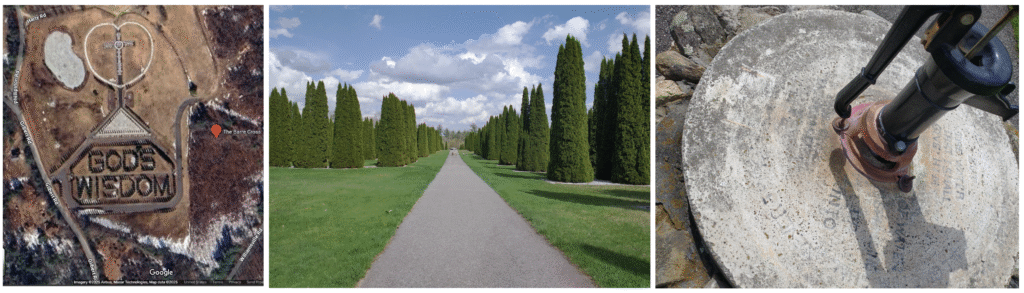
Barre, Massachusetts. Among many inscriptions, even “honor mother with Love,” is a well with faded scripture (John 4).
Q/A
This list may be expanded in the future, topics that may be relevant to this discussion. It only begins to address these questions, presenting topics for discussions.
Is God good? I could see that asked after reading this article. That is not addressed comprehensively here. I will make one observation: this question itself, which is raised even in the first book of the Bible (Genesis 18:22-33). This sense within you that all here is not well, your conscience, where did that thought itself come from? This investigation has reduced my faith in the goodness of man, what I thought even the local community would have concerned itself on words plainly in front of us.
What about the miracle of the sun? That is not addressed comprehensively here. But note that whether it happened, and the different observations (from the children and among the crowd), is a different question than if fully true what it would imply. Matthew 24:24 is often cited in other contexts, for example. But I’m curious about the background: what drove people to look into the sky and how are we similar?
How to view Mary? There are different views between Catholic, Orthodox, Protestants, Muslims, etc., but to view her like a priest who says don’t tell parents is not a common one (consider Luke 2:48-51). Mary fled and what she did was good (Matthew 2:13-14). This blog is not focused on whether Mary was immaculate (sinless) but whether the apparition was sinless.
What about the rosary? It figures prominently in this story, as mentioned at top, one of the apparition’s chief concerns, to exclusion of most anything else. Some include Fatima prayers within the rosary. There are examples of prayers in the New Testament, Psalms, etc., how these early Christians and their predecessors prayed.
How is sin addressed? In this story, children inflicted self-suffering to bring others out of Hell. That is not something the stories in the New or Old Testaments include. The closest to this may be Christ, whose suffering on the Cross was not from himself but from us. He did have a significant fast in Matthew 4 addressed with scripture when Satan asked for worship, as well as times Jesus feasted when with us like John 2 with Mary.
What is beauty? The first book of the Bible, Genesis, asks if God is good, and Joseph’s life could question this too, but the last chapter Genesis 50:20 ends with joyful tears of grace, that we intended for evil, God intended for good. God redeems the pain, as he did for the first Joseph. His light shines in darkness.
… May those who sow in tears reap with shouts of joy. Those who go out weeping, bearing the seed for sowing, shall come home with shouts of joy, carrying their sheaves… Psalm 126
Beauty
I trust there is some way to make this blog, this story in Ludlow, more beautiful than it is today. God is good, and if you have faith in that, I know we will see it most fully. There is no trust or faith if everything is seen, if every struggle is easy. But may our struggle be with dignity.
[8] To her credit, my own mother removed me from my childhood church, where we used to sing This Little Light of Mine, due to what a few men were doing to their wives, the body of Christ.
[9] Gen 3:14,19; Micah 7:17-19 – The serpent (Satan) was debased on his belly toward the ground to “eat” or lick dust, as the expression goes, and man too returned to dust in the ground, both due to sin, until the serpent’s head was crushed underfoot.
Sumol Compal: Single Integrated Report 2023 (page 72 or 93): “we follow the evolution of standards and invest in the certification (> Chap. 9.3) of the food safety system of our plants, choosing the BRCGS – Global Standard for Food Safety standard….For the second consecutive year, at Sumol Compal, we marked World Food Safety Day, celebrated on June 7th. As part of this initiative, we organized a talk on the theme ‘Impact of evolving standards in the food industry.’ This event had the participation of 99 employees, providing them with the opportunity to hear from experts on the topic…” — Now that’s a cause for sainthood, ‘cuz I drank one (or more).
fatima-ludlow.org – Serving Ludlow on community topics such as water, apparitions, and social commentary, an independent perspective except biased toward Jesus.